

For the Panch Kedar Pilgrimage, pack lightweight, layered clothing like merino wool base layers and waterproof shells to handle changing weather. Use sturdy trekking shoes with ankle support and trekking poles to ease the journey. Prepare physically with cardio and strength training, hydrate well, and acclimatize gradually to high altitudes. Respect local customs by dressing modestly and minimizing noise. With thoughtful gear and mindful preparation, you’ll fully embrace this sacred trek’s spiritual depth and rugged beauty—explore further for detailed tips.
Key Takeaways
- Follow the pilgrimage sequence: Kedarnath, Tungnath, Rudranath, Madhyamaheshwar, and Kalpeshwar to optimize trek difficulty and travel efficiency.
- Pack lightweight, layered clothing including merino wool base, fleece mid-layer, waterproof shell, beanie, and gloves for variable weather.
- Prepare physically with cardio, strength, flexibility exercises, and practice gradual altitude acclimatization to prevent sickness.
- Carry sturdy trekking shoes, trekking poles, a durable backpack with rain cover, and a comprehensive first-aid kit with energy-rich snacks.
- Respect local traditions by dressing modestly, maintaining silence in temples, minimizing waste, and avoiding flash photography during rituals.
What Is the Panch Kedar Pilgrimage and Why It Matters

Although many pilgrimages draw visitors from around the world, the Panch Kedar pilgrimage stands out for its unique spiritual and cultural significance. When you set out on the Panch Kedar journey, you’re connecting with five sacred Shiva temples nestled in the Garhwal Himalayas. Each temple represents a part of Lord Shiva’s body, offering a distinct divine experience. The pilgrimage isn’t just a physical trek; it’s a profound spiritual quest that deepens your faith and renewal. You’ll witness breathtaking landscapes while immersing yourself in ancient traditions and local customs. The Panch Kedar pilgrimage matters because it blends devotion, history, and nature, creating a transformative journey that stays with you long after you return home. This pilgrimage truly honors the timeless bond between man and the divine, making it a significant spiritual quest that resonates deeply with participants.
Plan Your Panch Kedar Route and Stops
You’ll want to map out the ideal travel sequence to make the most of your Panch Kedar journey. Identifying key resting points along the way guarantees you stay refreshed and ready for each temple visit. Consider your transportation options carefully, as they can greatly affect your pace and overall experience. Additionally, be sure to explore traditional souks where you can immerse yourself in local craftsmanship and culture during your travels.
Optimal Travel Sequence
Choosing the right sequence for visiting the Panch Kedar temples can transform your pilgrimage into a seamless and spiritually enriching journey. To make the most of your trip, consider this ideal travel sequence:
- Start at Kedarnath, the most prominent temple, setting a powerful spiritual tone.
- Head to Tungnath, the highest Shiva temple, offering breathtaking mountain views.
- Visit Rudranath, a serene spot with fewer crowds, perfect for quiet reflection.
- Conclude at Madhyamaheshwar and Kalpeshwar, which are relatively accessible and provide a peaceful end to your pilgrimage.
Following this order minimizes backtracking and balances challenging treks with easier routes, ensuring you stay energized and focused on your spiritual goals throughout the journey.
Key Resting Points
Since the Panch Kedar trek covers rugged terrain and changing altitudes, planning your resting points is essential to maintain energy and enjoy the spiritual experience fully. You’ll want to schedule stops at key villages like Gaurikund, Ukhimath, and Guptkashi, which offer basic accommodations and local eateries. These spots serve as perfect recovery hubs after challenging stretches, letting you acclimatize and refresh. Don’t miss taking breaks near serene spots like the Mandal and Kedarnath bases, where the peaceful surroundings aid mental relaxation. Prioritize overnight stays that balance comfort with proximity to temples, so you can start fresh each morning. By thoughtfully choosing your stops, you’ll minimize fatigue, stay hydrated, and immerse yourself fully in the pilgrimage’s spiritual rhythm.
Transportation Options Overview
Although the Panch Kedar pilgrimage offers breathtaking landscapes and spiritual solace, traversing its remote locations requires careful transportation planning. You’ll need to map out your route and stops efficiently to make the most of your journey. Here’s how to approach your transportation options:
- Private Taxi: Offers flexibility and comfort, allowing you to stop at key sites and rest points on your own schedule.
- Shared Jeeps: Cost-effective and popular among pilgrims, these run between major towns but may have limited schedules.
- Local Buses: The cheapest option, though they cover only certain stretches and may not reach all pilgrimage spots.
- Trekking: Essential for reaching the final temples, so prepare for rugged trails and plan your gear accordingly.
Balancing these choices guarantees a smooth, memorable pilgrimage experience.
Pick the Best Time to Start Your Panch Kedar Trek
When you set out on your Panch Kedar trek, timing can make all the difference between a challenging journey and a truly magical experience. The ideal period is from May to October, when the weather is pleasant, trails are accessible, and the mountain views are breathtaking. Avoid monsoon months (July-August) as heavy rains can cause landslides and slippery paths, making trekking risky. Winter months bring heavy snowfall, blocking routes and limiting access. Early mornings offer the clearest skies, so starting your trek at dawn lets you soak in stunning sunrises over the Himalayas. Planning your trek during this window not only guarantees safer conditions but also lets you fully immerse yourself in the serene beauty and spiritual atmosphere of the Panch Kedar pilgrimage. Additionally, understanding the cultural traditions of the region can enrich your experience by connecting you with the local heritage along the way.
Respect Local Traditions and Pilgrimage Etiquette
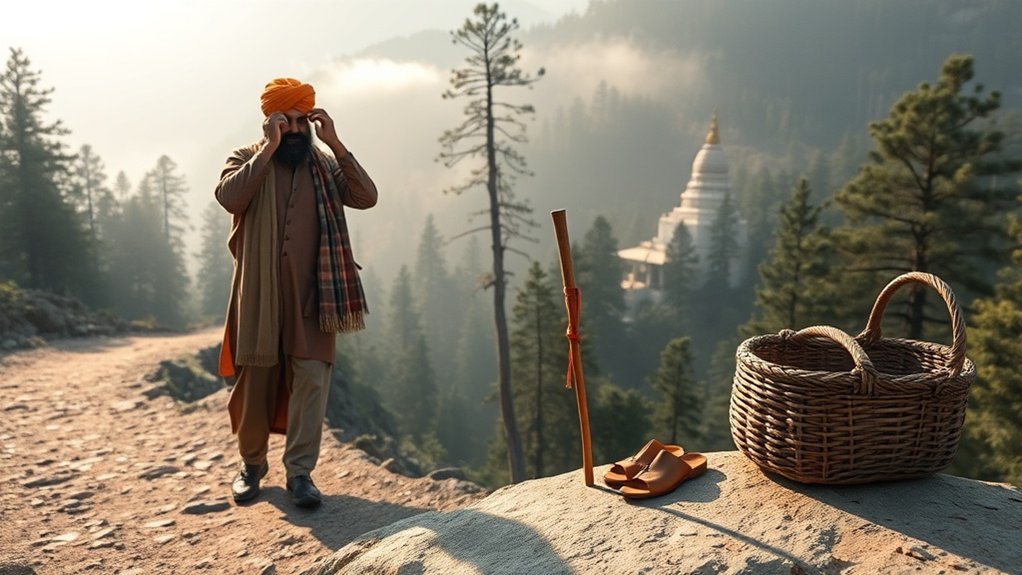
When you visit the Panch Kedar temples, make sure to dress modestly and respect the local dress codes. Pay close attention to temple rituals and follow them with sincerity to honor the traditions. Keep noise to a minimum and help maintain cleanliness to preserve the sacred atmosphere for everyone. Additionally, understanding the importance of family roles can enhance your appreciation of the community dynamics surrounding these sacred sites.
Dress Modestly And Appropriately
Since the Panch Kedar pilgrimage holds deep spiritual significance, dressing modestly and appropriately shows your respect for local traditions and the sacred atmosphere. When preparing your attire, keep these guidelines in mind:
- Choose loose, comfortable clothing that covers your shoulders and knees to maintain modesty.
- Opt for natural fabrics like cotton or wool, which breathe well during long walks and varying weather.
- Avoid flashy colors or bold patterns; muted, earthy tones blend well with the serene surroundings.
- Bring a light shawl or scarf to cover your head when required, especially inside temples or during rituals.
Observe Temple Rituals Carefully
Dressing respectfully sets the tone for your entire Panch Kedar experience, but showing reverence doesn’t stop at your clothing. When you enter each temple, take a moment to observe the rituals carefully and follow the lead of local devotees. Remove your shoes before stepping inside and avoid touching sacred idols or artifacts unless permitted. Participate in prayers or offerings with sincerity, understanding their significance. Use your right hand for any exchanges, like receiving prasad or offerings. Pay attention to the priest’s instructions during ceremonies, and don’t hesitate to ask respectfully if you’re unsure about any custom. By honoring these traditions, you deepen your connection to the pilgrimage and show genuine respect for the spiritual heritage that defines Panch Kedar.
Maintain Silence And Cleanliness
Although the serene atmosphere of the Panch Kedar temples invites quiet reflection, maintaining silence requires conscious effort from every visitor. You play a crucial role in preserving this sacred calm. Here’s how you can respect local traditions and pilgrimage etiquette:
- Speak softly or not at all inside temple premises to honor the peaceful vibe.
- Switch off mobile phones or keep them on silent to avoid disturbing others.
- Dispose of waste responsibly—carry reusable bags and never litter to keep the surroundings pristine.
- Avoid using flash photography or loud devices, which can disrupt spiritual rituals.
Prepare Physically for High-Altitude Trekking

When you commence the Panch Kedar pilgrimage, your body will face the challenges of high-altitude trekking that demand strength, stamina, and acclimatization. To prepare, start with cardiovascular exercises like brisk walking, jogging, or cycling to build endurance. Include strength training focusing on your legs, core, and back to handle uneven terrain and heavy backpacks. Don’t forget flexibility exercises and yoga to improve balance and reduce injury risk. Gradually increase your workout intensity over weeks to mimic trekking conditions. Also, spend time hiking on hills or stairs to simulate altitude challenges. Hydrate well and practice breathing exercises to enhance lung capacity. Proper physical prep boosts your confidence, reduces fatigue, and helps you fully embrace the spiritual journey without physical setbacks. Additionally, incorporating sustainable practices into your preparation can enhance your overall experience and respect for the local environment.
Pack Light for Your Panch Kedar Trek
You’ll want to pack only the essentials to keep your load manageable on the steep trails. Choose versatile, lightweight clothing that can handle changing weather without weighing you down. Focusing on quality gear and minimal items will make your trek smoother and more enjoyable. Additionally, consider incorporating sustainable practices to minimize your environmental impact while trekking through these pristine landscapes.
Essential Trekking Gear
Five essential items can make all the difference when packing for your Panch Kedar trek. Choosing the right gear guarantees safety, comfort, and an enjoyable journey through rugged terrain.
- Sturdy Trekking Shoes – Opt for waterproof, well-broken-in shoes with good ankle support to tackle rocky paths and unpredictable weather.
- Trekking Poles – These reduce strain on your knees and improve balance, especially on steep ascents and descents.
- Headlamp with Extra Batteries – Early starts or late finishes are common; reliable light keeps you safe in low visibility.
- Durable Backpack with Rain Cover – A lightweight, comfortable backpack protects your gear from sudden showers and distributes weight evenly.
Pack smart, focusing on quality over quantity, to keep your load manageable while staying prepared for the trek’s challenges.
Minimalist Clothing Choices
Although the Panch Kedar trek demands preparation, packing light with minimalist clothing lets you move freely and stay comfortable throughout your journey. Choose versatile, quick-drying fabrics that layer easily to adapt to shifting mountain temperatures. Stick to essential items that serve multiple purposes, and avoid bulky pieces that weigh you down.
Here’s a simple guide to minimalist clothing for your trek:
| Item | Material | Purpose |
|---|---|---|
| Base Layer | Merino wool | Moisture-wicking, warmth |
| Mid Layer | Fleece | Insulation, lightweight |
| Outer Layer | Waterproof shell | Weather protection |
| Accessories | Beanie, gloves | Warmth, comfort |
Navigate Weather and Terrain Confidently
When trekking through the rugged paths of the Panch Kedar, understanding the local weather patterns and terrain is essential to staying safe and comfortable. The landscape shifts dramatically—from steep, rocky inclines to dense forest trails—while the weather can change from warm sunshine to sudden cold showers. To navigate confidently:
- Check daily weather forecasts before setting out to avoid unexpected storms or fog.
- Wear sturdy, waterproof hiking boots with good grip for slippery rocks and muddy paths.
- Layer your clothing so you can adjust easily to temperature swings throughout the day.
- Use trekking poles to maintain balance on uneven terrain and reduce strain on your knees.
Additionally, being aware of seasonal rainfall variability can help you plan your trek to minimize exposure to potential downpours.
Where to Stay and Eat on the Panch Kedar Trek
After preparing for the changing weather and challenging terrain, you’ll want to plan where to rest and refuel during your Panch Kedar trek. Along the route, simple guesthouses and lodges in villages like Guptkashi, Kedarnath, and Ukhimath offer basic but comfortable accommodations. Book in advance during peak season to secure a spot. Meals typically consist of hearty, local fare—think dal, rice, and fresh vegetables—that will recharge your energy. Don’t miss trying traditional Kumaoni dishes when possible. Carry some snacks and water for the longer stretches between villages, as food options can be sparse. Staying hydrated and nourished is essential to keep your stamina up. With thoughtful planning, you’ll find welcoming places to relax and enjoy the spiritual journey ahead. Additionally, exploring culinary traditions that reflect local flavors can enhance your trekking experience.
Stay Safe With Health Tips for Panch Kedar Pilgrims
Because the Panch Kedar trek challenges both your body and spirit, prioritizing your health is essential for a safe and fulfilling pilgrimage. To stay strong on the trail, pay attention to these key health tips:
- Hydrate consistently – Drink plenty of clean water to avoid dehydration at high altitudes.
- Acclimatize properly – Ascend gradually to prevent altitude sickness and listen to your body’s signals.
- Pack a thorough first-aid kit – Include medications for headaches, stomach issues, and minor injuries.
- Eat nourishing meals – Choose energy-rich, easily digestible foods to maintain stamina and avoid digestive troubles. Additionally, be mindful of malnutrition and food insecurity as they can impact your overall health during the trek.
Final Checklist for a Successful Panch Kedar Trip
Five essential items can make all the difference in your Panch Kedar pilgrimage experience. First, pack sturdy trekking shoes to navigate rugged trails comfortably. Next, bring layered clothing to adapt to unpredictable mountain weather. Don’t forget a reliable water bottle with purification tablets to stay hydrated safely. Carry a compact first-aid kit tailored to altitude sickness and minor injuries. Finally, a power bank guarantees your phone stays charged for navigation and emergencies.
Before you leave, double-check your permits, ID, and accommodation bookings. Make sure your backpack isn’t overloaded—lightweight gear enhances mobility. Familiarize yourself with the route and local customs to stay respectful and prepared. With this final checklist, you’ll step confidently into your sacred journey, ready to embrace both its challenges and blessings.
Frequently Asked Questions
Can I Use Local Guides for the Panch Kedar Trek?
Yes, you can use local guides for the Panch Kedar trek. They know the terrain well, guarantee your safety, and enrich your experience with cultural insights. Just make sure to hire trusted, knowledgeable guides before starting.
Are There Any Mobile Network Providers With Coverage on the Route?
Imagine trying to call home, but your signal fades like a candle in the wind. On the Panch Kedar trek, only BSNL and Airtel offer patchy coverage, so don’t rely on your phone for everything.
What Cultural Festivals Coincide With the Panch Kedar Pilgrimage?
You’ll find local festivals like Nanda Devi Raj Jat and Kumaoni folk celebrations coinciding with the pilgrimage, enriching your journey with vibrant rituals, traditional music, and dance, deepening your spiritual and cultural experience in the Himalayas.
Is It Possible to Rent Trekking Gear Locally Near the Pilgrimage Sites?
Coincidentally, you can rent trekking gear near the pilgrimage sites, but options are limited and basic. It’s wise to bring essential equipment yourself to stay prepared, ensuring comfort and safety throughout your rugged journey.
How Do I Handle Waste Disposal During the Trek?
You should carry biodegradable bags to pack out all your waste, never leaving trash behind. Use designated disposal spots if available, and always respect nature’s sanctity by minimizing waste and practicing Leave No Trace principles during your trek.


